
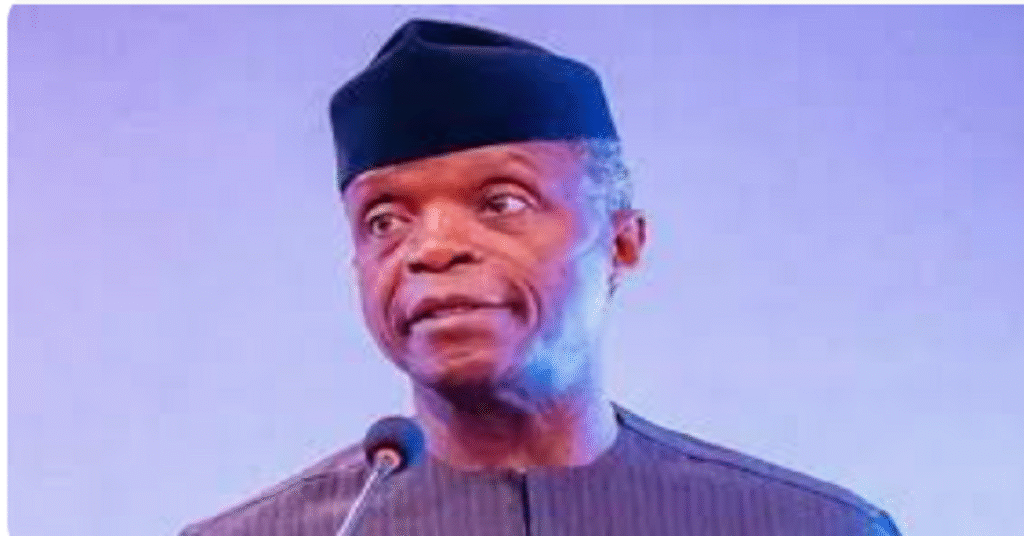
Former VP pressured security agency behind scenes to release activist despite detention orders, new book reveals.
LAGOS, Nigeria – Former Vice President Yemi Osinbajo apparently went head-to-head with Nigeria’s Department of State Services over its refusal to obey court orders releasing activist Omoyele Sowore back in 2019. What’s emerging from veteran journalist Richard Akinnola’s upcoming book are some pretty explosive details about just how far Osinbajo was willing to push behind the scenes.
Legal Expert VP Felt Personally Compromised
Akinnola’s “I Write What I Like” covers Nigerian political drama from 2017 to 2025, and it’s a hefty 198 pages. What stands out is how Osinbajo seems to have viewed the DSS defiance as something that could seriously damage his own reputation not just the government’s.
Here’s someone who had built his career as a law professor and Lagos State Attorney-General. According to Akinnola, Osinbajo basically told DSS officials he “had a professional career and reputation to protect after leaving office.” He warned that “flagrant disregard for the court would not only stain the administration but also his name.”
It’s interesting and maybe telling that his concern appears to have been as much personal as constitutional. The confrontation does reveal tensions within the Buhari administration that most of us never knew existed.
Sustained Backchannel Negotiations Led to Release
So while Sowore sat in detention despite multiple court orders, Osinbajo was apparently working the phones and having quiet conversations with DSS leadership. He kept insisting that constitutional principles couldn’t just be tossed aside. Whether his pressure actually made the difference in Sowore’s eventual release is hard to say definitively, but the timing suggests it may have helped.
What’s perhaps more significant is that this wasn’t a one-off thing. Akinnola documents what looks like a pattern of Osinbajo pushing back on:
Related Posts:
• The prolonged detention of Shiite leader Ibrahim El-Zakzaky
• Various other cases where security agencies simply ignored court orders
• What appears to be systematic challenges to judicial authority
Book Launch Reveals Government Internal Dynamics
“I Write What I Like” gets its public debut on September 13 at Lagos Airport Hotel during Akinnola’s 67th birthday celebration. Having Gani Adams, the Aare Ona Kakanfo of Yorubaland, chair the event suggests this isn’t just another book launch there’s clearly some political weight behind it.
The timing is curious too, coming as President Tinubu’s administration faces its own questions about security agency accountability and judicial independence.
Sowore Case Background and Broader Impact
Let’s be honest the Sowore case was messy from the start. The Sahara Reporters publisher got arrested in August 2019 just before he planned to lead anti-government protests. Even after multiple Federal High Court orders said “let him go,” the DSS kept him locked up for months. Civil society groups and international observers weren’t having it.
The whole thing became something of a test case for rule of law under Buhari. Legal experts were pretty consistent in their criticism of security services ignoring court orders, especially when it came to activists and opposition figures.
What Akinnola’s book suggests and this is where it gets interesting is that there was more pushback from within the government than anyone realized. Osinbajo emerges as someone who was genuinely uncomfortable with these practices, though whether that was principle or pragmatism is open to interpretation.
What This Means Going Forward
These revelations highlight what seems to be an ongoing problem with Nigeria’s constitutional order. We’re still seeing cases where detained protesters and political activists find themselves caught between security concerns and judicial authority.
Some constitutional lawyers think the Osinbajo story shows how individual officials can actually push back against institutional behaviour, even in hierarchical structures like security agencies. Others might argue it shows how little real power even a Vice President had when security agencies decided to go their own way.
Either way, it’s a reminder that what we see publicly often tells only part of the story.