

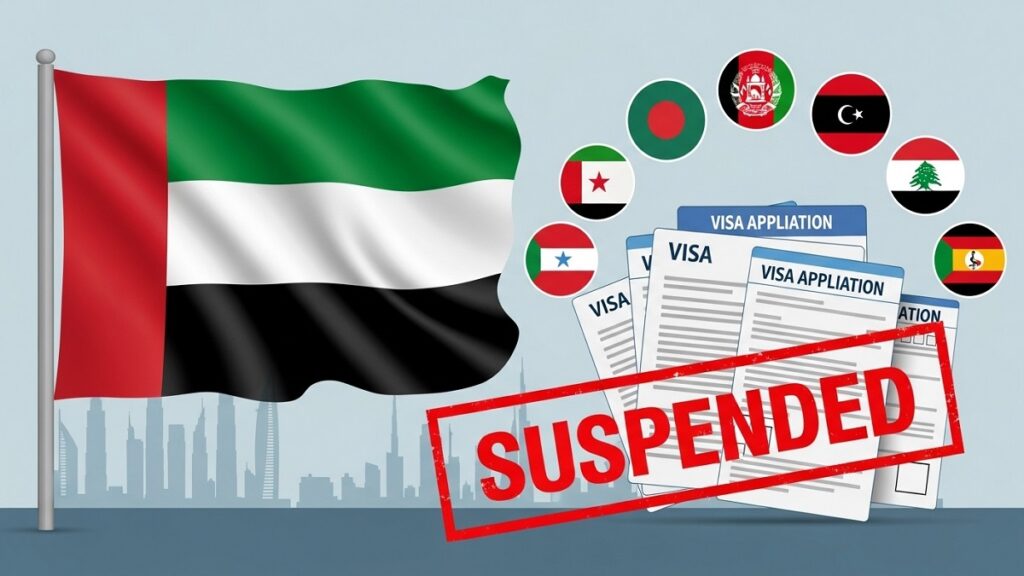
The temporary halt affects new tourist and work visa applications, with no specified timeline for review.
DUBAI, UAE – The United Arab Emirates has quietly suspended new tourist and work visa applications for citizens from nine African and Asian countries, including Bangladesh. An internal immigration circular suggests this policy shift affects future applications, though people who already hold valid visas can breathe a sigh of relief, they’re not being kicked out.
Which Countries Made the List?
Nine nations find themselves on the UAE’s temporary no-go list: Afghanistan, Libya, Yemen, Somalia, Lebanon, Bangladesh, Cameroon, Sudan, and Uganda. The Times of India first reported on what appears to be a confidential immigration document that’s been making rounds in official circles.
Here’s what’s interesting, this isn’t a complete travel ban. If you’re from one of these countries and already have a UAE visa, you can still live and work there without any issues. It’s only new applications that have hit a wall. Still, for millions of people who might have been planning a Dubai vacation or looking for work opportunities, this policy shift is pretty significant.
Why Now? The Security Angle
UAE officials haven’t exactly been forthcoming about their reasoning, which is typical for immigration policy changes in the Gulf. But reading between the lines, national security concerns seem to be driving this decision. The UAE has dealt with document fraud before, fake passports, sketchy paperwork, people slipping through cracks in the system.
It’s worth noting that the Emirates has pulled similar moves in the past when things got messy with verification processes. Whether this is an overreaction or a necessary precaution probably depends on who you ask.
The Bigger Picture: Politics and Pandemic Hangover
Diplomatic tensions may also be at play here, though it’s hard to say which specific relationships have soured. Countries sometimes use visa policies as a way to send messages without making formal diplomatic statements, it’s immigration policy as foreign policy, if you will.
Related Posts:
Then there’s the lingering COVID factor. The pandemic really exposed how tricky it can be to manage health screenings across borders, especially when some countries have stronger healthcare systems than others. Public health protocols still seem to influence these decisions, even though we’re well past the peak crisis phase.
Some officials apparently worry about virus variants and inconsistent health monitoring in certain regions, though whether these concerns are still justified in 2025 is debatable.
Economic Fallout
This policy hits particularly hard for Bangladesh and other South Asian countries that have long supplied workers to the UAE’s construction sites, hotels, and homes. We’re talking about significant migration flows that have been happening for decades.
The ripple effects are already being felt. UAE employers who depend on workers from these countries are now scrambling to figure out their staffing needs. Tourism from these regions, which isn’t huge but still matters, will likely take a hit too.
What’s frustrating for everyone involved is the complete lack of a timeline. No one knows if this is a six-month thing or if it could drag on indefinitely, leaving both potential migrants and UAE businesses in limbo.
MINT