

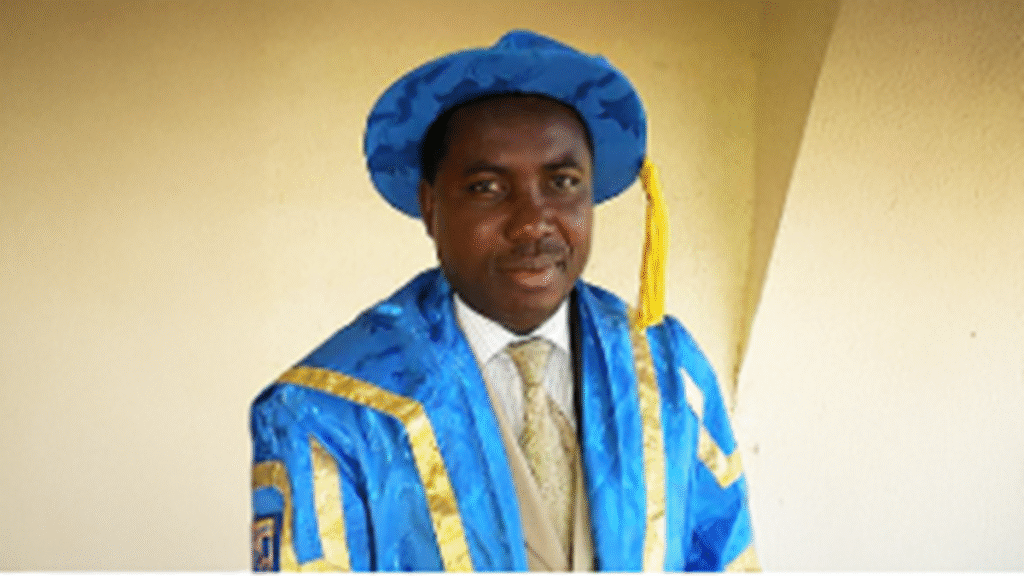
First Kogi State native to lead Nigeria’s electoral body brings over 30 years of legal expertise
Abuja, Nigeria – President Bola Tinubu has appointed Professor Joash Ojo Amupitan, a Senior Advocate of Nigeria, as the new Chairman of the Independent National Electoral Commission (INEC), replacing outgoing Professor Mahmood Yakubu.
Historic Appointment Approved by National Council
The National Council of State gave its nod to Amupitan’s nomination on Thursday. It’s a milestone moment for Kogi State, this marks the first time someone from the state will head Nigeria’s election management body.
Presidential spokesperson Bayo Onanuga confirmed the development in a statement released Thursday evening. Amupitan, who hails from Ayetoro Gbede in Ijumu Local Government Area, takes over at what many see as a critical juncture for Nigeria’s democracy.
With elections always contentious in Nigeria, and calls for transparency growing louder after recent cycles, the timing of this appointment raises questions about what direction INEC might take under new leadership.
Currently Deputy Vice-Chancellor (Administration) at the University of Jos, Amupitan brings more than three decades of experience straddling academia and legal practice. Whether that academic background will translate into effective electoral administration remains to be seen.
Academic Journey and Legal Career
Amupitan’s story at the University of Jos started in 1989 when he joined as an Assistant Lecturer. He climbed the ladder steadily, making Reader in 2003, then full Professor of Law by 2008.
Interestingly, all three of his degrees (Bachelor’s, Master’s, and Doctorate in Law) came from the same institution. Some might question whether this represents limited exposure, though others would argue it shows deep institutional knowledge and loyalty.
Related Posts:
He was called to the Nigerian Bar in 1988 after completing his studies at the Nigerian Law School in Lagos.
His specializations, Law of Evidence, Corporate Law, Corporate Governance, and Privatisation Law, do appear relevant to running an electoral body, particularly the governance and evidence aspects. The prestigious SAN designation came his way in 2014, a recognition that only a select few lawyers receive.
Administrative Leadership and National Service
University administration has been a big part of Amupitan’s career. He’s served as Dean of the Faculty of Law and Head of the Department of Public Law at Jos. He also chaired the Committee of Deans and Directors, which involves coordinating different faculty leaders, essentially herding cats in an academic setting.
His reach extends beyond Jos. He’s sat on the Council of Legal Education and the Governing Council of the Nigerian Institute of Advanced Legal Studies. Just before this INEC appointment, he was Pro-Chancellor and Chairman of Council at Joseph Ayo Babalola University in Osun State.
That’s a lot of committee work. Critics might wonder if he’s been too comfortable in academic circles to handle the rough-and-tumble world of Nigerian electoral politics. Supporters would counter that his board experience shows he can navigate complex institutional relationships.
Research Contributions and Professional Memberships
On paper, Amupitan’s academic credentials look solid. He’s authored or co-authored over 50 publications touching on corporate governance, electoral law reform, and petroleum industry legislation. He’s also supervised more than a dozen postgraduate students through their research.
His professional memberships read like a who’s who of Nigerian legal and academic organizations, the Nigerian Bar Association, Nigerian Institute of Management, and National Association of Law Teachers among them.
He’s also had his feet in the corporate world, serving on boards for Integrated Dairies Limited and Riss Oil Limited. This blend of academic, legal, and business experience could prove useful, though INEC’s challenges are often more political than technical.
Family and Personal Background
Amupitan is married to Dr. Yemisi Amupitan, and they have four children. His appointment went through the proper constitutional channels, with the National Council of State giving the required approval for INEC leadership positions.
What happens next is anyone’s guess. Stakeholders across Nigeria’s fractured political landscape will be watching closely to see what kind of chairman he turns out to be. His background in electoral law reform might hint at upcoming changes, but academics don’t always make great reformers once they’re inside government institutions.
The shift from Professor Yakubu to Professor Amupitan keeps INEC in academic hands, which some see as good for credibility, while others worry it perpetuates a certain insularity in how Nigeria’s elections are managed.
Time will tell if Amupitan’s decades in lecture halls and law libraries have prepared him for what’s likely to be the most scrutinized job of his career.