
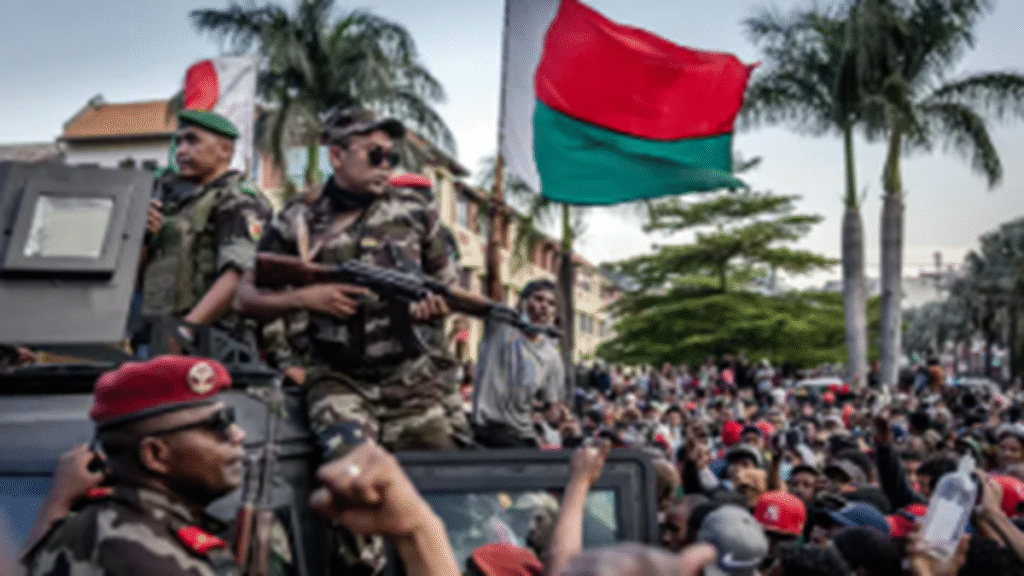
Elite CAPSAT unit takes control as parliament votes to remove Andry Rajoelina from office
ANTANANARIVO, Madagascar – Madagascar’s elite CAPSAT military unit seized power Tuesday after parliament voted to impeach President Andry Rajoelina, who faces accusations of abandoning his duties during weeks of deadly anti-government protests.
Military Announces Takeover, Suspends Constitution
Colonel Michael Randrianirina, commander of the CAPSAT military unit, announced the power seizure outside the presidential palace. He read a statement suspending the constitution and declaring military control.
“We have taken power,” Randrianirina confirmed to AFP. A governing committee composed of officers from the army, gendarmerie, and national police will assume presidential duties, he said.
The colonel announced plans to establish a civilian government “after a few days.” He left open the possibility of including senior civilian advisers in the military committee.
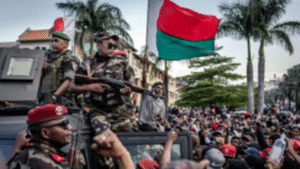
After the announcement, CAPSAT officers drove through Antananarivo in armored Humvees and pickup trucks. Hundreds of soldiers stood in formation at their base to receive them. Crowds lined the streets, cheering and waving as the convoy passed.
“It’s a huge joy,” said businesswoman Baovola Zanarison Rakotomanga, 41, celebrating at city hall. “We have suffered for so long… we hope to now be able to move forward, united.”
Parliament Votes to Impeach Rajoelina
Lawmakers voted 130 to impeach Rajoelina for desertion of duty, exceeding the two-thirds constitutional threshold required. The vote proceeded despite presidential orders to dissolve the national assembly.
Related Posts:
Madagascar’s constitutional court later validated the impeachment and confirmed Randrianirina’s authority to govern.
The presidency denounced “a clear act of attempted coup” and insisted Rajoelina “remains fully in office.” Officials said the parliamentary session was “devoid of any legal basis.”
President in Hiding as Crisis Deepens
Rajoelina, 51, addressed the nation late Monday from an undisclosed location. Reports suggest he left Madagascar with assistance from France, though some sources indicate he may have traveled to Dubai.
“I am in a safe place to protect my life,” said Rajoelina, who holds French nationality. He claimed he was “on a mission to find solutions” to the crisis and would not let the impoverished nation “destroy itself.”
The president refused demands to step down from a protest movement that began September 25. Demonstrations initially focused on power and water shortages but expanded into broader opposition to Rajoelina and the ruling elite.
Deadly Protests Turn Against France
At least 22 people died in the protests, according to the United Nations. The government dismissed this early toll without providing alternative figures.
The youth-led movement gained momentum when CAPSAT joined protesters over the weekend. The unit played a major role in the 2009 coup that first brought Rajoelina to power.
The gendarmerie followed, admitting to “faults and excesses” against demonstrators.
At a rally outside city hall Tuesday, protesters expressed anger at France, Madagascar’s colonial ruler until 1960. Demonstrators accused Paris of meddling in the island nation’s affairs.
“It’s like they’re colonising us again,” said civil engineer Koloina Rakotomavonirina, 26. “We want them to leave our island for good.”
International Community Responds
The African Union and SADC regional bloc issued statements of concern about the crisis. The United Nations said it opposes any coup attempt.
“If there is a coup underway, we would stand against that,” said Farhan Haq, spokesman for UN Secretary-General Antonio Guterres. “We’re trying to see exactly what happens, once the dust is settled.”
Madagascar has experienced political instability since independence. The island nation of 30 million people ranks among the world’s poorest countries despite rich natural resources.
What Happens Next
CAPSAT’s governing committee faces the task of forming a transitional government while addressing the grievances that sparked protests. Power and water shortages remain urgent issues for the capital’s residents.
The international community will likely pressure military leaders to restore democratic governance quickly. Madagascar’s previous coups triggered sanctions and aid suspensions.
AFP