
Country ranks behind DRC and Ethiopia in 2024 development assistance despite aid representing just 0.21% of GDP
ABUJA, Nigeria – Nigeria has emerged as Africa’s third-largest recipient of United States development assistance in 2024, securing $876 million from the US Agency for International Development (USAID), according to a new continental development report.
Nigeria Ranks Third in USAID Funding
The Africa Sustainable Development Report 2025 puts Nigeria among the top beneficiaries of American development aid. The report, jointly produced by the African Union Commission, the UN Economic Commission for Africa, the African Development Bank, and the UN Development Programme, shows an interesting picture of who’s getting what.
Democratic Republic of Congo topped the list with $1.3 billion in USAID support, while Ethiopia came in second with $1.25 billion.
Nigeria’s $876 million placed it ahead of South Sudan ($830m), Kenya ($824m), Mozambique ($756m), and Sudan ($694m). The top ten African beneficiaries collectively received $8.1 billion in USAID funding during 2024.
Aid Represents Tiny Fraction of Nigerian Economy
Here’s where things get interesting. Despite receiving one of the largest allocations in absolute terms, the aid accounted for just 0.21 percent of Nigeria’s Gross Domestic Product, the second-lowest ratio among the top ten beneficiaries.
What this appears to suggest is that while Nigeria gets substantial USAID support, its relatively large economy means the assistance doesn’t go as far proportionally.
Related Posts:
South Sudan tells a different story entirely. Though it received less total funding than Nigeria, aid represented 6.05 percent of its GDP, the highest ratio among major recipients. It’s a reminder of how smaller, conflict-affected economies lean far more heavily on external assistance just to keep basic services running.
Regional Gaps in Development Financing
The report flagged significant differences in financing needs across African regions. East and West Africa show the largest gaps, driven partly by the continent’s most populous countries.
“At the subregional level, East and West Africa exhibit the largest financing needs and gaps, driven by the presence of some of the continent’s most populous countries, including Nigeria, Ethiopia, and the Democratic Republic of Congo,” the report stated.
North and Southern Africa reported smaller funding gaps, likely because of relatively higher development levels and broader fiscal space for government spending.
The 2025 report stressed that while aid flows remain important, African countries need to boost domestic resource mobilization. Better fiscal efficiency is critical if they’re going to bridge the vast financing gaps holding back progress toward Sustainable Development Goals.
Trump Freeze Puts 2025 Funding in Limbo
Nigeria’s access to a proposed $602.95 million USAID grant for 2025 became uncertain after President Donald Trump imposed a 90-day suspension of agency programs.
The funding freeze came from an executive order Trump signed when he returned to office in January 2025. The order called for a comprehensive review of US foreign assistance, ostensibly to assess effectiveness, cut waste, and make sure funds align with American national interests.
Key sectors now face real uncertainty: health, governance, economic development, and security programs that depend heavily on USAID funding in Nigeria are all hanging in the balance.
Health Sector Braces for Impact
According to the proposed 2025 budget, a whopping 89.27 percent of Nigeria’s allocation ($538.5m) was meant for health programs. That number alone shows just how dependent the country has become on US support for healthcare delivery.
The biggest chunk—$368 million—was earmarked for HIV/AIDS initiatives under the Global Health Programme, with $322 million from GHP-State and $46 million from GHP-USAID.
Other health allocations included $22 million for tuberculosis control, $73 million for malaria prevention, $33.25 million for maternal and child health, and $22.5 million for family planning services.
Only $2.5 million was budgeted for water supply and sanitation, which seems oddly low given ongoing concerns about clean drinking water access, especially in rural communities.
The suspension has thrown all these programs into doubt.
Security and Economic Programs Also at Risk
Peace and security initiatives were slated to get $7.6 million, including $2.8 million for conflict mitigation, $1 million for military partnerships, and $3.05 million for citizen security and law enforcement.
These funds reflect US interest in stabilizing Nigeria and countering terrorism from Boko Haram and Islamic State–West Africa Province in the North-East. Any cuts could weaken Nigeria’s ability to tackle insecurity at what may be the worst possible time.
Economic growth programs were set to receive $39.6 million—the largest allocation outside health. Agriculture accounted for $29.1 million, private sector productivity got $1.5 million, and clean energy projects received $5 million.
The breakdown suggests a shift in US priorities toward economic sustainability over direct humanitarian relief. Whether that’s the right approach is debatable.
Nigeria Scrambles to Fill the Gap
The Nigerian government has approved $200 million to cushion the blow from suspended USAID funding. The Ministry of Finance says the money will go toward essential vaccine procurement, antiretroviral drug distribution, and maternal health services.
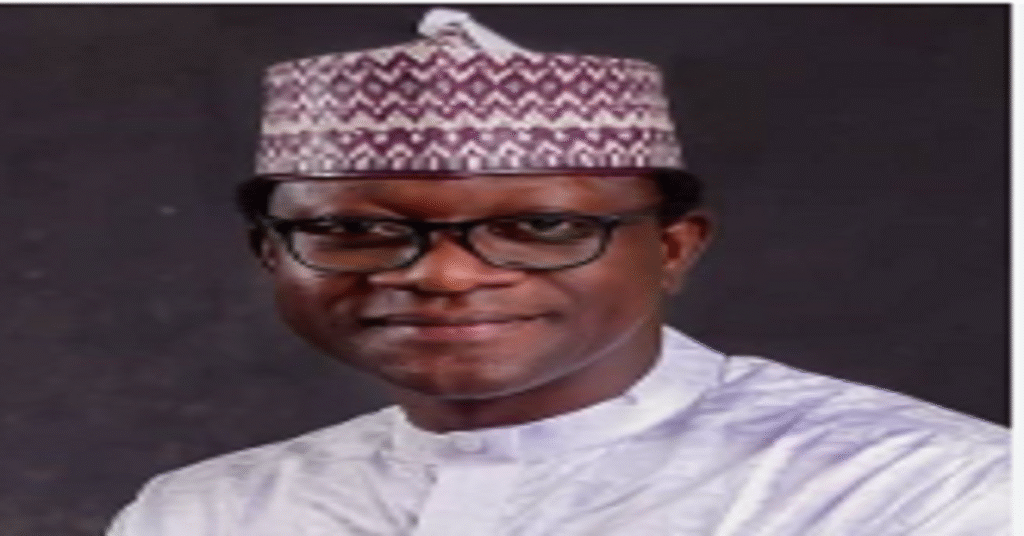
Professor Ali Pate, Coordinating Minister of Health and Social Welfare, announced that the Federal Government plans to directly employ 28,000 health workers who were previously funded under USAID programs.
Pate says the government is ready to take ownership of Nigeria’s healthcare system in light of the new US policy direction. But whether domestic funding can realistically replace American assistance remains an open question.
The whole situation underscores the risks of leaning too heavily on external aid for critical services. It might just force Nigeria toward greater self-sufficiency in health and development financing which, depending on your perspective, could be either a crisis or an overdue wake-up call.
PUNCH