

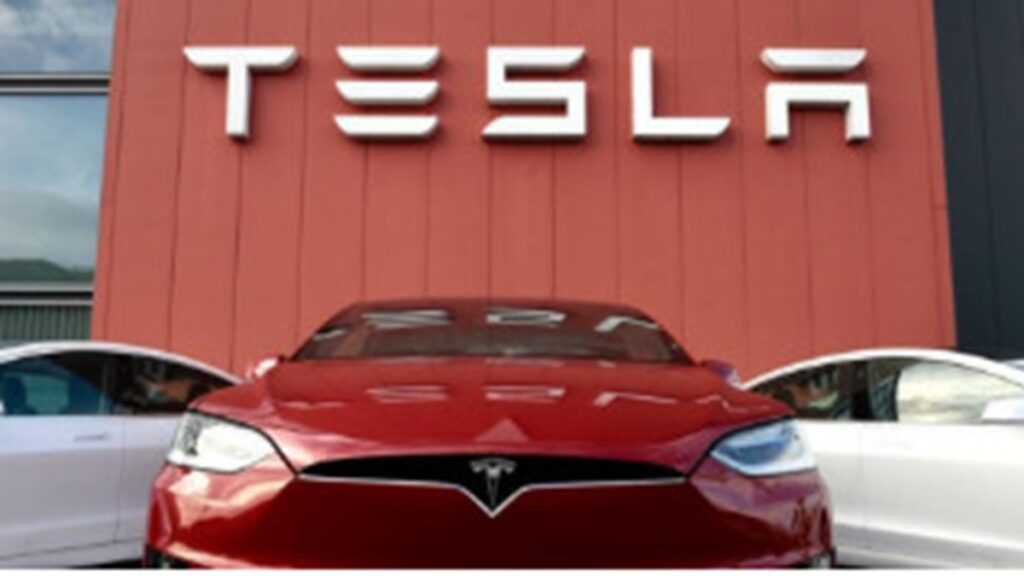
Price cuts on Model 3 and Model Y fail to impress Wall Street as federal EV tax credit expires
NEW YORK, United States – Tesla shares dropped 4.1 percent Tuesday after the electric vehicle maker unveiled revamped Model 3 and Model Y vehicles with reduced prices following the end of federal tax credits.
Tesla Cuts Prices on Standard Models
Elon Musk’s electric vehicle company began taking orders for “standard” versions of the Model 3 sedan and Model Y midsize SUV priced at around $40,000 or less on its website. The revamped standard models come in roughly $5,000 below previous bare-bones versions.
The price adjustments follow the federal EV tax credit’s expiration on September 30, up to $7,500 per vehicle just vanished. Sweeping tax and fiscal legislation backed by President Donald Trump phased out initiatives designed to counter global warming, eliminating the subsidy that had made electric vehicles more affordable for American buyers.
In states like New York, where a $2,000 state credit still exists, the Model 3 standard version drops to $34,900 from $36,990 before incentives. But Tesla’s website estimates the actual purchase price at $42,068 in New York once taxes and fees get added. That’s not quite the bargain it sounds like at first glance.
Wall Street Reaction: Disappointment Over Lack of Innovation
Analysts weren’t convinced the latest models would do much for Tesla’s sales. Wall Street has been hungry, desperate, even, for Musk to release brand new models that wow consumers rather than just tweaking prices on existing vehicles.
CFRA Research’s Garrett Nelson called the announcement “a disappointment for investors desperately hoping for new models such as the long-awaited Roadster.” He added that “one of the biggest reasons behind Tesla’s market share losses is the staleness of its vehicle portfolio.”
That criticism gets at a growing concern among investors: Tesla’s lineup feels dated compared to newer electric vehicle competitors flooding the market. Legacy automakers and startups alike have launched fresh EV models in recent years, steadily chipping away at Tesla’s once-dominant position.
Related Posts:
Dan Ives of Wedbush Securities said he was “relatively disappointed” that the new prices are only about $5,000 below prior versions of the Models 3 and Y. The modest cut may not be enough to offset losing the $7,500 federal tax credit that previously made Tesla vehicles more competitive. Do the math, buyers are still worse off than before.
Social Media Hype Falls Flat
Tesla hyped the announcement over the weekend through social media posts, building expectations among investors and consumers. The buildup appears to have backfired, with the actual reveal falling well short of the anticipation the company’s marketing machine had created.
This pattern has become painfully familiar for Tesla watchers. Musk frequently generates buzz through social media, sometimes delivering groundbreaking announcements but other times leaving audiences underwhelmed. Tuesday’s reaction suggests investors are growing weary of hype without substantive product changes.
The company’s reliance on price cuts rather than new model launches raises uncomfortable questions about its product development pipeline. Competitors are releasing fresh designs while Tesla continues tweaking vehicles that have been on the market for years.
Market Share Challenges Mount
Tesla’s market share in the electric vehicle sector has been declining as competition intensifies. The company once enjoyed near-monopoly status in the premium EV market but now faces serious challengers from established automakers like Ford, General Motors, and European manufacturers.
Chinese EV makers have also emerged as formidable competitors, offering feature-rich vehicles at competitive prices. BYD recently surpassed Tesla in global EV sales—a symbolic shift that underscores just how much the landscape has changed.
Losing the federal tax credit compounds these challenges. While Tesla argued it no longer needed subsidies, the credit helped price-sensitive buyers justify purchasing electric vehicles over cheaper gas-powered alternatives. Without it, that calculus gets harder.
Looking Ahead: New Models Needed
Analysts seem to agree on one thing: Tesla needs to launch genuinely new vehicles to reinvigorate growth. The long-promised Roadster sports car, Cybertruck variants, and a more affordable compact car have all been delayed or remain stuck in development limbo.
Musk has promised a $25,000 Tesla for years, a vehicle that could crack open the mass market. Yet concrete plans for this affordable model remain unclear, leaving investors wondering when, or if, it will actually materialize.
The company’s focus on autonomous driving technology and robotaxis may represent its future. But investors want to see traditional vehicle sales growth in the meantime. Price cuts alone won’t solve the fundamental issue: consumers want new, exciting electric vehicles, not discounted versions of familiar models they’ve seen for years.
Tesla shares closed down 4.1 percent in afternoon trading, reflecting Wall Street’s muted response to what the company had positioned as a significant announcement.
AFP