
Prominent Lagos pastor says political figures including ex-governor urge him to align with opposition party
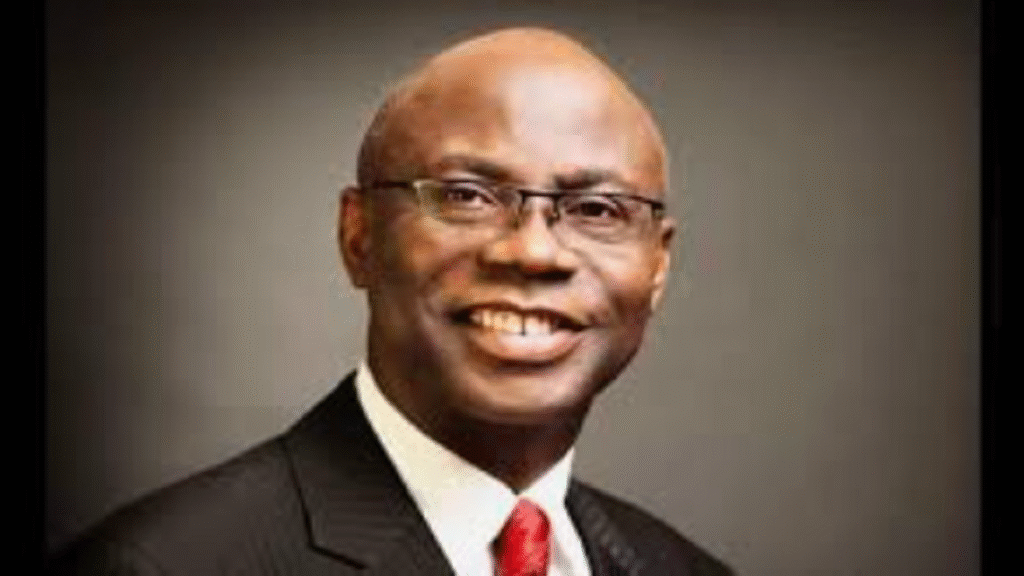
LAGOS, Nigeria – Dr. Tunde Bakare, founder of Citadel Global Community Church, says he’s been facing serious pressure from political stakeholders to join the African Democratic Congress (ADC). But during a governance dialogue in Lagos on Saturday, he made it clear that’s not happening.
Pastor Turns Down ADC Recruitment Push
At the first-ever Citadel School of Governance Dialogue Series, themed ‘Nigeria at 65: Historical Reflections, Futuristic Projection’,Bakare didn’t hold back. Several big names in politics have been knocking on his door about joining the opposition party, he revealed.
“There has been a lot of pressure on me from who is who to join ADC. They come to my home. Even while I was abroad, the hierarchy of that party kept calling, saying they needed my voice,” the cleric told attendees at the Oregun, Lagos event.
The recruitment drive appears to involve heavy hitters. Bakare mentioned a former governor and minister from the South-West region. Even one of his younger political associates, someone who’d benefited from holding key offices in the All Progressives Congress (APC), urged him to throw his weight behind the ADC.
Bakare Says No, Warns of Historical Divisions
Bakare, who was deeply involved in forming the APC, rejected the idea outright. His reasoning mixed both religious conviction and a pointed historical warning.
“I am not going to take part in ADC. The last time I knew about ADC was about a plane that crashed. I wish them well, because we need a strong opposition,” Bakare said. “But you don’t birth a child called APC and then try to kill it yourself. We are not going to have another Awolowo–Akintola crisis in the South-West.”
Related Posts:
That reference carries weight. The Awolowo-Akintola crisis of the 1960s saw Chief Obafemi Awolowo and Chief Samuel Akintola tear the Action Group party apart, destabilizing the entire Western Region. It’s a bitter chapter in Yoruba political history that many would rather not repeat.
Divine Backing for Tinubu, Bakare Claims
Bakare, who himself ran for president under the APC banner in 2023, believes President Bola Tinubu’s rise was divinely ordained. He’s defending the current administration, even as criticism mounts over economic hardships.
“If God wants to remove ’emilokan,’ He knows how to do it. You can’t get the kind of thing Tinubu has brought without God’s support,” he said, invoking Tinubu’s famous campaign phrase that roughly translates to “it’s my turn” in Yoruba.
It’s worth noting that Bakare’s political involvement goes back years, he ran as vice-presidential candidate alongside former President Muhammadu Buhari in 2011 under the now-defunct Congress for Progressive Change.
Corruption and Tribalism Called Nigeria’s Twin Evils
Professor Akinjide Osuntokun, a former Nigerian Ambassador to Germany, also spoke at the event. He zeroed in on what he sees as the country’s two biggest problems: corruption and tribalism.
“The two problems our country faces are corruption and tribalism. If there is a way of eradicating these two evils, we will be alright. Corruption is the father or mother of tribalism,” Osuntokun said.
His argument was straightforward, if stolen funds were actually used for development, Nigeria would be in much better shape. He pushed back against ethnic-based political loyalty too.
“The fact that Tinubu is president does not automatically improve the life of an average Yoruba man, just as an Igbo presidency will not improve the life of the ordinary Igbo man if there is no development,” the professor noted.
It’s a perspective that challenges the ethnic solidarity often used to justify political support in Nigeria.
What This Says About Nigeria’s Opposition
The ADC came up as an alternative after the 2015 political shake-up, when the APC and People’s Democratic Party (PDP) emerged as the two dominant forces. But the party has struggled to break through nationally, despite running candidates in recent elections.
Bakare’s refusal may signal just how difficult it is for opposition parties in Nigeria to attract influential figures who already have a foothold elsewhere. His decision also suggests loyalty to the APC runs deep, even when the party’s economic record faces sharp criticism.
Through his Citadel School of Governance Dialogue Series, Bakare appears intent on staying politically engaged, just not through formal opposition channels. He’s keeping his influence alive through his religious platform while remaining, at least for now, firmly within the APC fold.